
Your deep affection for your dog may stem from a fractured American Dream and a diminished sense of purpose post-pandemic.

Americans have a deep affection for dogs.
, and nearly all pet owners consider their animals to be – with 51% stating pets belong “as much as a human member.” The pet sector continues to create a growing number of jobs, , . Educational institutions are struggling to keep pace with .
This appears to be part of what Mark Cushing, an attorney and lobbyist for veterinary concerns, terms “”: the increasingly privileged position pets hold in American society. In his 2020 book “,” he contends that the internet has led to greater loneliness, causing people to focus more intensely on their pets as a replacement for human connections.
I propose, however, that a different phenomenon is occurring, especially since the COVID-19 lockdown: The love for dogs has become an expression not of loneliness, but of how dissatisfied many Americans are with society and their fellow humans.
In my own book, “,” I examine how contemporary dog culture is more a sign of societal distress than a solution for it. Dogs are not merely stand-ins for people. As a philosopher who researches the , I am of the view that Americans are seeking solace in dogs to ease . For some owners, dogs simply provide than other people can.
I am no exception. I share my home with three dogs, and my affection for them has prompted me to study dog ownership culture to gain a better understanding of myself and others. , dogs are who can . But I contend that many Americans are placing expectations on their pets to solve problems that the animals are incapable of fixing.
Dogs over people
During the pandemic, many grappled with the tedium of being confined for long periods with other humans – children, , roommates. Meanwhile, .
Adopting shelter animals , and on social media, individuals shared their joy about being home with their pets. Canine-related content on and now frequently features hashtags such as #DogsAreBetterThanPeople and .
The phrase “The more I learn about people, the more I like my dog” is printed on merchandise sold on , and Redbubble.
One indicates that dog owners often rank their pets higher than their human family members in several categories, like companionship and support. They also reported having fewer negative encounters with their dogs than with the most important people in their lives, such as children, partners, and relatives.
marked her 90th birthday with . In an interview with Stephen Colbert, she said she prefers dogs to chimpanzees, because . https://www.youtube.com/embed/3xGvLApNrFQ?wmode=transparent&start=0 Jane Goodall expressed her appreciation for dogs’ “unconditional love.”
Fraying fabric
This fervor for dogs appears to be intensifying as America’s social fabric frays – which .
In 1972, 46% of Americans stated “.” By 2018, that figure had fallen to 34%. Americans compared to the past, a trend known as the “,” and they steer clear of conversations with strangers because . People are .
Currently, millennials constitute the . Some cultural analysts suggest dogs hold particular significance for this generation because other conventional signs of stability and adulthood – like a mortgage or children – are or simply unappealing. A survey by the Harris Poll, a marketing research company, found that 43% of Americans .
Facing these pressures, many individuals seek comfort in a pet – yet the anticipated benefits of dog ownership are becoming increasingly unrealistic.
For some, dogs provide a sense of being loved, alleviate the pressure to have children, combat job monotony, reduce the stress of competitive work life, and offer a connection to the outdoors. Some anticipate that having a pet will enhance their physical .
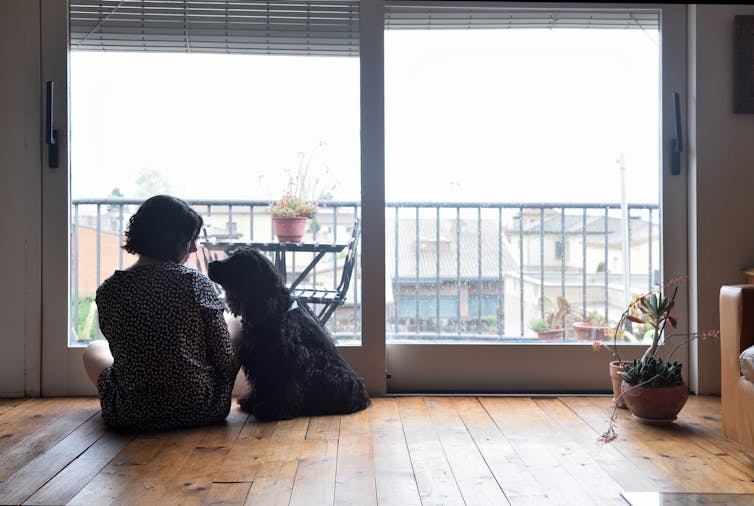
And this provides some benefit, to an extent. Research has shown ” and than owners of cats. Engaging with pets can boost your health and might even provide some . Canine-training initiatives in correctional facilities seem to .
Unreasonable expectations
However, the expectation that dogs will compensate for social and emotional voids in our lives actually hinders the well-being of both dogs and humans.
In philosophical language, this could be described as an extractive relationship: People are utilizing dogs for emotional support, drawing from them things that are unavailable elsewhere or that they no longer desire from other sources. Similar to , extractive relationships are not sustainable in the long run.
The late posited that the current phase of capitalism generates a cycle termed “,” where “life building and the attrition of life are indistinguishable.” The effort to keep up is so draining that, to sustain that lifestyle, we engage in activities that lead to our gradual decline: Work turns into monotony under , and the dating scene is marred by unhealthy .
In a parallel way, modern dog culture is fostering detrimental and unsustainable patterns. Veterinary professionals are worried that the popularity of the “fur baby” lifestyle, where pets are treated like human offspring, , as pet owners request non-essential vet treatments, diagnostics, and drugs. Pets left alone at home during work hours , which may lead to and . And as pet populations increase, many owners end up surrendering their animals, .
What is the solution? Certain philosophers and activists call for , maintaining that it is ethically wrong to treat any animal as property.
This is a difficult argument to win – particularly among dog enthusiasts. Dogs were . They have co-evolved with humanity , and are a fundamental . Some researchers claim that , rather than the reverse.
Maybe we can redesign elements of home life, family, and society to be more beneficial for both dogs and people – for instance, by and . A world that prioritizes human well-being would naturally also prioritize the well-being of pets. However, that would result in an America quite distinct from the present one.
, Distinguished Professor of the Humanities,
This article is republished from under a Creative Commons license. Read the .
