
Trump states China has agreed to purchase $17 billion worth of American beef annually
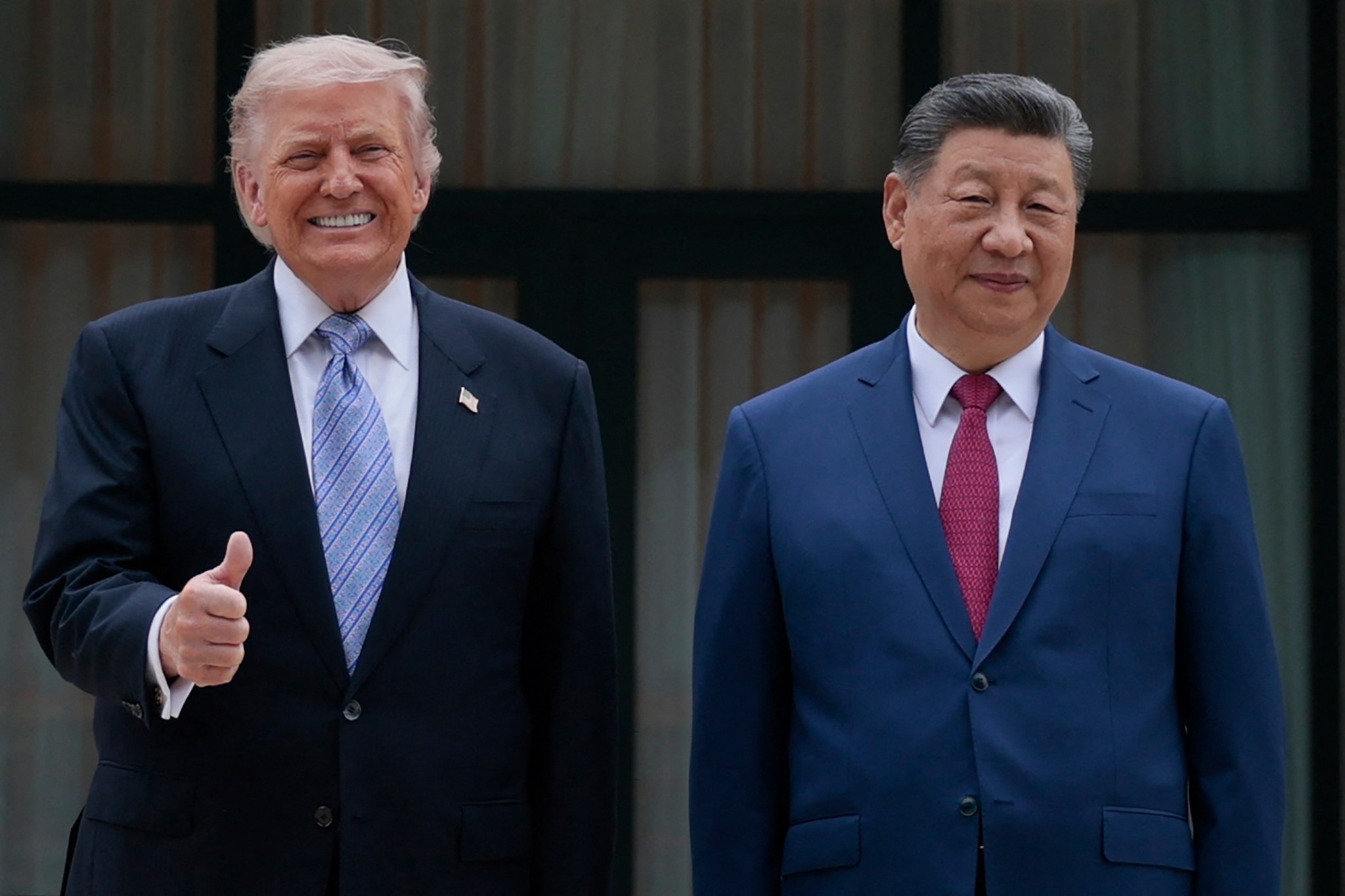
(SeaPRwire) – China has committed to expanding trade in U.S. agricultural products, including beef and poultry, with annual purchases of $17 billion set for 2026, and maintained at that level through 2027 and 2028, according to a White House announcement on Sunday—two days after President Donald Trump concluded a high-stakes summit in Beijing aimed at mitigating the impact of the trade war he initiated last year on American farmers.
The agreement includes China restoring market access for U.S. beef and resuming imports of poultry from U.S. states designated by the USDA as free of avian flu, the White House stated. These deals build upon previous commitments by China to purchase soybeans from the United States.
The agreements provide some relief to American farmers affected by the trade war, who previously saw their primary export markets for soybeans and other goods severely limited. Farmers are also facing additional pressures due to recent policies under the Trump administration; specifically, the conflict between the U.S. and Israel with Iran has disrupted shipping through the Strait of Hormuz—a crucial global trade route—leading to shortages in fertilizer supplies worldwide and driving up prices.
There was no immediate confirmation of these terms from Beijing.
However, China’s Ministry of Commerce affirmed on Saturday that both sides would “resolve or make substantial progress toward resolving certain non-tariff barriers and market access issues” concerning agricultural goods.
A spokesperson from the ministry explained that the U.S. would “actively work” to address Chinese concerns over the detention of its dairy and seafood products, the export of potted bonsai trees, and recognition of Shandong province as an avian flu-free zone. In turn, China would “likewise actively work” to resolve U.S. concerns regarding the registration of beef processing facilities and the export of poultry meat from certain states to China.
The two nations also agreed to broaden trade, including farm goods, via reciprocal tariff reductions on “a specific range of products,” although the spokesperson did not specify which items would be included.
Recognizing the connection between food security and national security, China has diversified its sources for imported soybeans, beef, and other agricultural products, increasingly sourcing from Brazil, Argentina, and other countries rather than the U.S.
China sharply cut back US imports during the trade war
Data from the USDA indicates that China’s imports of U.S. agricultural goods peaked at $38 billion in 2022 but declined to just $8 billion in 2025. This includes nearly $18 billion in soybean purchases in 2022, down to $3 billion in 2025.
It remains unclear how much additional volume China will commit to purchasing from American soybean producers, who were particularly hard-hit during the trade war. Traditionally the largest foreign buyer of U.S. soybeans, China ceased all purchases last year following Trump’s imposition of higher tariffs on Chinese goods.
This latest accord builds upon a broader trade truce reached by Trump and Chinese President Xi Jinping in October, wherein China agreed to resume buying U.S. soybeans. At that time, the White House announced that China pledged to purchase 12 million metric tons in the current marketing year and 25 million metric tons annually for each of the next three years.
According to the White House, hundreds of U.S. beef processing plants—including those operated by Tyson and Cargill—will again be authorized to export to China, though the actual scale of beef sales remains uncertain.
Last year, China allowed licenses for hundreds of U.S. beef plants to expire, resulting in imports dropping to less than $500 million in 2025, compared to a peak of $2.14 billion in 2022, per USDA figures.
U.S. exports of poultry meat and products to China totaled $286 million in 2025, down significantly from over $1 billion in 2022.
Trump and Xi used summit to find areas of economic cooperation
During the recent summit, Trump and Xi explored ways to strengthen economic cooperation, such as increasing market access for American businesses in China and encouraging greater Chinese investment in U.S. industries, the White House noted. The leaders agreed to establish separate boards dedicated to trade and investment—though details about their structure or distinctions from existing dialogues remain scarce.
As outlined by the White House, the Board of Trade will facilitate discussions on trade matters involving “non-sensitive goods,” while the Board of Investments will serve as a forum for addressing investment-related issues between the two sides.
China’s Ministry of Commerce clarified that these bodies would allow both governments to manage respective concerns related to trade and investment. Specifically, the Board of Trade is expected to focus on topics like tariff reductions for select products. “In principle, the two sides agreed to reduce tariffs on products of mutual concern at equivalent scales,” the ministry spokesperson added.
Xi emphasized during last week’s meetings that China would continue opening its doors wider for foreign investment, especially when speaking with U.S. business executives accompanying Trump on his trip. Among them was Brian Sikes, CEO of agribusiness giant Cargill.
Soybeans—used in China for livestock feed and biofuels—are among the top U.S. agricultural exports. Historically, they accounted for roughly half of all U.S. agricultural shipments to China.
USDA data shows that as of May 7, the U.S. had exported 10.9 million metric tons of soybeans to China, positioning it on track to meet its earlier commitment by August 31—the end of the current marketing year. However, this falls short of the 25–30 million metric tons typically purchased in prior years.
Prior to Trump’s originally scheduled visit to Beijing in late March (which was postponed due to the Iran conflict), the American Soybean Association urged him to prioritize soybean negotiations with Xi.
Scott Metzger, president of the association, remarked Thursday that the group hoped to see “additional soybean purchases this marketing year, along with continued progress toward fulfilling future commitments.” He added, “Greater certainty and consistency in the marketplace help provide farmers with the confidence they need as they make decisions for the year ahead.”
___
AP journalist Kevin Vineys contributed to this report.
This article is provided by a third-party content provider. SeaPRwire (https://www.seaprwire.com/) makes no warranties or representations regarding its content.
Category: Top News, Daily News
SeaPRwire provides global press release distribution services for companies and organizations, covering more than 6,500 media outlets, 86,000 editors and journalists, and over 3.5 million end-user desktop and mobile apps. SeaPRwire supports multilingual press release distribution in English, Japanese, German, Korean, French, Russian, Indonesian, Malay, Vietnamese, Chinese, and more.