
The 106 Million Bitcoin Owners Who Think They Own the Network (But Don’t)
(SeaPRwire) – Bitcoin sold you a dream of decentralized wealth and delivered exactly the opposite. You bought into the idea that anyone with an internet connection could participate in the hardest money ever created. You didn’t get that. You got a ledger where a handful of entities control the majority of the supply while you chase price movements through a custodial app.
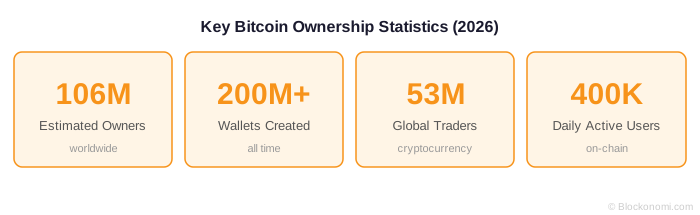
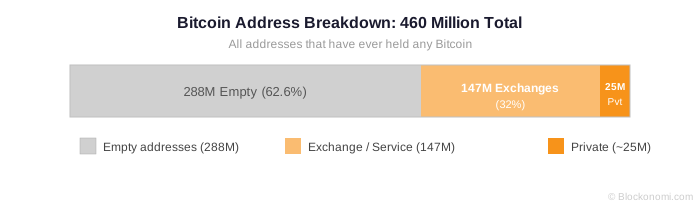
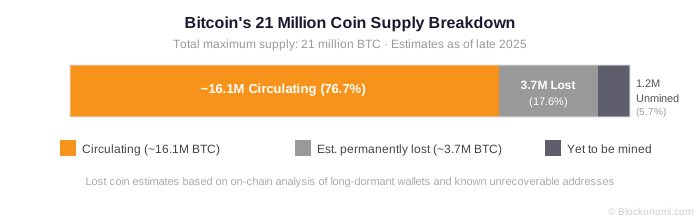
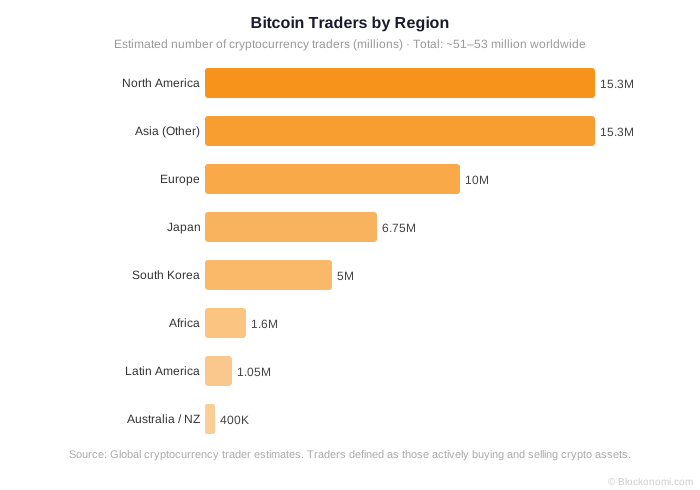
Around 106 million people globally own Bitcoin today, roughly 1.3 percent of the world population. Of 460 million addresses that ever received BTC, only 288 million remain active. Most of the rest went dormant years ago. About 172 million addresses still hold coins, yet 147 million of them belong to exchanges and service providers. That leaves roughly 25 million addresses that appear to belong to private individuals. UTXOs grew from 64 million in January 2020 to 180 million by October 2024, meaning holdings keep fragmenting into smaller pieces. The math does not add up to decentralization.
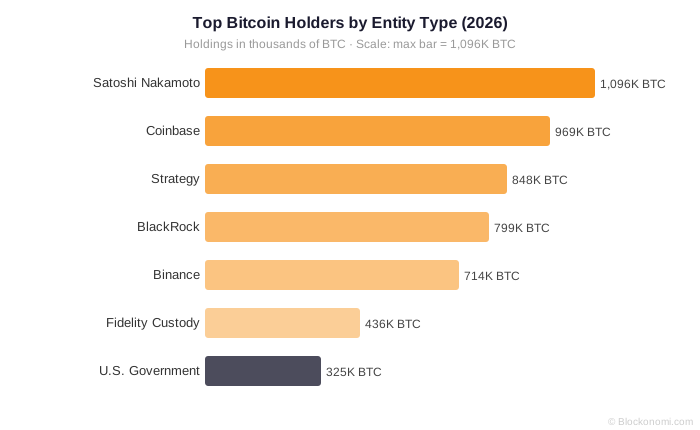
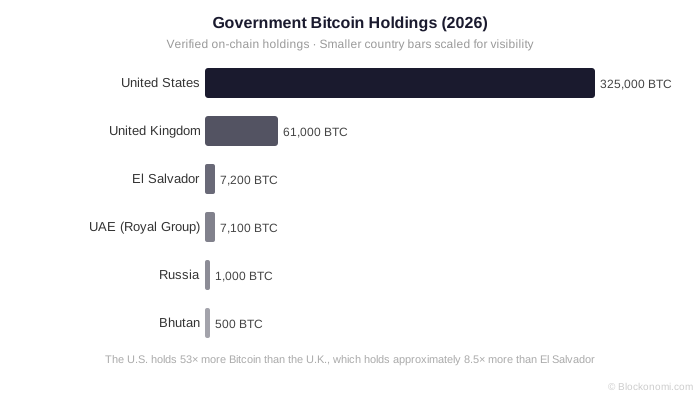
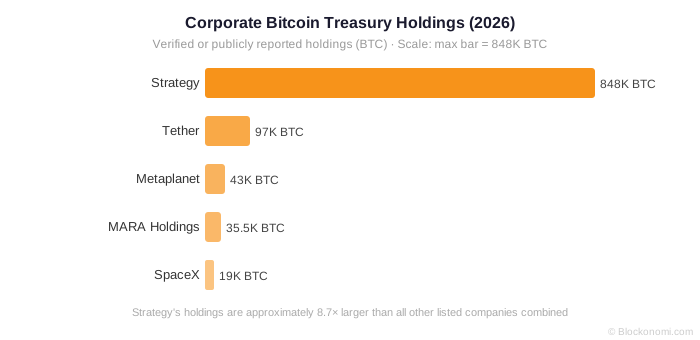
On-chain data tells a different story than the marketing. Satoshi Nakamoto controls 1.096 million BTC, valued at approximately $92 billion. Arkham identified these addresses through the Patoshi mining fingerprint pattern. Coinbase holds 969,000 BTC, representing 4.8 percent of total supply, though none of it belongs to the company. Binance sits at 714,000 BTC and 3.6 percent. Strategy holds 848,000 BTC, BlackRock holds 799,000 BTC, and Fidelity Custody holds 436,000 BTC on behalf of clients. The U.S. government possesses 325,000 BTC from Silk Road seizures, Bitfinex hack recoveries, and the LuBian Hacker address. The UK government controls 61,245 BTC from the Jian Wen and Zhimin Qian seizure. China seized 194,775 BTC from PlusToken operators in 2020, though it remains unclear whether those coins are still held. Germany acquired 50,000 BTC from Movie2k in January 2024 and sold everything by July. El Salvador holds 2,546 BTC as a legal tender reserve asset purchased for $108 million, buying approximately one Bitcoin per day at one point.
The five largest individual wallets are all cold storage reserves run by exchanges, not their own capital. Binance alone controls two of the top five. Robinhood ranks third with 141,000 BTC, followed by Bitfinex with 130,000 BTC. Tether holds 97,000 BTC in its Bitcoin reserves, and the U.S. government’s FBI Bitfinex recovery wallet sits at 95,000 BTC. A single unknown address labeled bc1qd4y…v4rzr holds 92,000 BTC. No one knows who owns it.
The real question here is simple. When exchanges hold nearly all the circulating supply in custody, when governments seize and sell rather than hold, and when an anonymous creator from 2009 still moves nothing but watches from 1.096 million coins, who actually controls Bitcoin? The 106 million retail holders do not. They own exposure. They own IOUs wrapped in blockchain terminology. They own the illusion of sovereignty over an asset whose distribution curve was decided by whoever mined first. The network is real. The decentralization narrative is not.
Author bio: Silas Sterling is a veteran kernel contributor and editor-in-chief of an open-source security digest, specializing in cryptocurrency infrastructure analysis and protocol governance research.